Sunday, December 21, 2014

TOW #14- Precision Parking by Volkswagen (visual text)

 
This advertisement was published by Volkswagen. Volkswagen is a well-known, prestigious car company with a good reputation. Therefore, the advertisement does not have to do much to establish ethos, since Volkswagen already has automatic ethos as a maker of good cars. The advertisement was made to advertise the “park assist” feature in the Volkswagen cars. It does this by humorously comparing the ability of the car to a hedgehog and bags of goldfish. This humor appeals to pathos and catches the viewer’s attention. The use specifically of the hedgehog and the bags of goldfish emphasize the importance of the feature of the car to park accurately (it is implied that if the hedgehog is the slightest bit off from where it is “parked”, then it will pop the fish bag and the fish will die). The simplicity of the white background draws attention to the hedgehog and the fish (specifically the hedgehog since it is the one different object in the advertisement). Additionally, attention is drawn to the animals with the words being very small and out of the way (they are just on the bottom right corner, as opposed to being large in the center). However, the words are also very simple, only saying “Precision Parking,” as opposed to describing thoroughly how the hedgehog needs to be in the right place or else, etc. As a result, the words contribute slightly to the humor as well as give context to the importance of the hedgehog being in the right place (for example, one might just view the image as a hedgehog and some fish and be confused about why the car company is showing this picture). Therefore, the words provide context to the ability of the car that Volkswagen is advertising. The viewer is likely to be inclined to buy the car because of its amazing parking feature, as portrayed through the animals in the advertisement.

Sunday, December 14, 2014

TOW #13- The Lives of a Cell by Lewis Thomas (written text)

“The Lives of a Cell” was written by Lewis Thomas in 1971. Thomas was a physician, and although he just started writing “for fun,” he soon became a successful author as well. Thomas was a prominent medical researcher, and he was the dean of both NYU Medical School and Yale Medical School. He was well-known for his creative and original hypotheses and for his writings. This significant scientific research and important professions provided Thomas with automatic ethos in his writings. “The Lives of a Cell” was published in The New England Journal of Medicine. As a result, this essay was probably published for other people involved in medicine to read. Another clue that this was published for other people involved in medicine is that Thomas references specific terms, such as “mitochondria,” that the general public might not understand, unless they were involved in medicine. Therefore, Thomas’s purpose in writing this essay is to give the people involved in medicine a more uncommon view of the earth, the ecosystem, and the cells, etc. Thomas’s essay seems argumentative, and he is arguing that the earth is not nearly as fragile a place as one might imagine. Instead, it is composed of a multitude of complex parts working together, and humanity is the fragile part. In order to to argue this, Thomas begins by refuting the counterargument, and common belief, that humanity is fragile. Thomas writes, “We are told that the trouble with Modern Man is that he has been trying to detach himself from nature...In this scenario, Man comes on as a stupendous lethal force and the earth is pictured as something delicate...But it is illusion to think that there is anything fragile about the life of the earth...” (Thomas 1-2). By beginning with this common belief and then subsequently refuting it in a logical way with research, the reader is able to more easily be persuaded to believe Thomas’s opinion. After the initial counterargument rebuttal in the beginning of the essay, Thomas goes on to prove his point throughout the essay with specific examples, such as by explaining the complexity of mitochondria within us, before concluding at the end with a full circle, thought-provoking ending that the earth is in fact a living cell. In this way, Thomas draws together the title and his description of the cells, as well as his description of the earth, in order to give a final declaration of the complexity of the earth and the frailness of humanity.  

Sunday, December 7, 2014

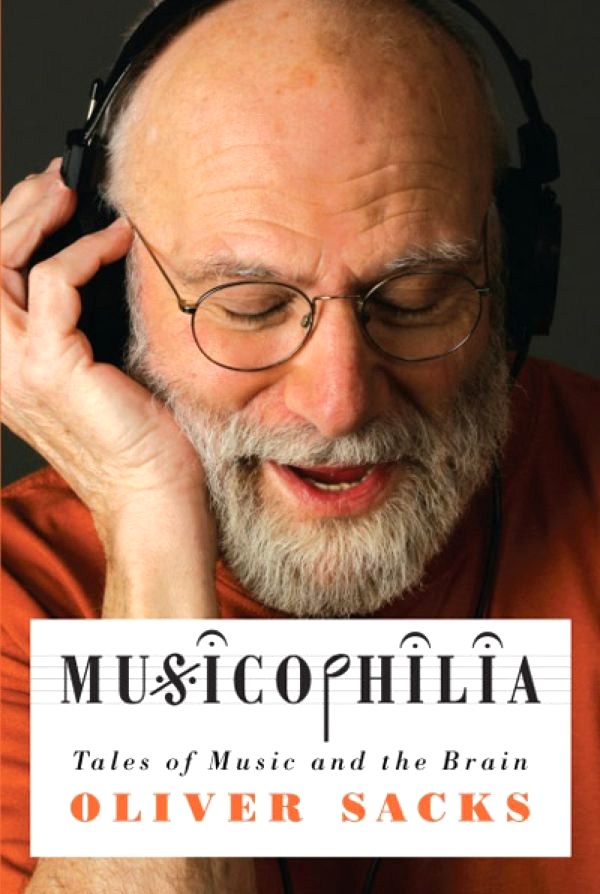
TOW #12- Musicophilia by Oliver Sacks (IRB post 1)

For my IRB, I am reading Musicophilia by Oliver Sacks. Oliver Sacks is a world-renowned neurologist who is a professor of neurology at the NYU School of Medicine, as well as a physician and an author. He has written many books about neurology in addition to this book. He establishes ethos in his written by referencing the numerous patients he has treated on the topic, saying, “...I have occasionally had patients with a similar sudden onset of musical or artistic interests” (8). The first part of the book that I have read so far is about anomalies people have experienced in their brains with a connection to music. For example, some people have experienced seizures triggered by certain types and sounds of music, while other people have experienced a sudden appreciation and desire to learn certain things about music as a result of a traumatic brain experience, such as being in an accident, struck by lightning, or having a brain tumor. The book is written in order to inform the reader about these crazy, seemingly unnatural experiences. It is written for the general public, so although the topic is a highly advanced medical idea, it is written in a way that the general public has to be able to understand. As a result, the Sacks writes using a plethora of anecdotes, both personal and general, and footnotes. Sacks’ personal anecdotes refer to his personal experiences, while his general anecdotes give clear examples of people who have experienced the topics about which he is writing. As a personal anecdote, Sacks writes, “As I was dressing this morning after a swim, I was reminded, now I was on land again, of my painful, arthritic old knees-and I thought too about my friend Nick, who would be visiting that day” (36). This personal anecdotes give Sacks a personal connection to his audience, as well as to the topic about which he is speaking. The general anecdotes give examples of the experiences about which Sacks is writing in order to help the audience understand more clearly. For example, Sacks writes, “Tony Cicoria was forty-two, very fit and robust, a former college football player who had become a well-regarded orthopedic surgeon in a small city in upstate New York” (3). The footnotes, as well, help the reader understand the topic, since they provide additional information on the studies and topics referenced that the general public might not know otherwise. In this way, Sacks effectively accomplishes his purpose of informing the general public about crazy experiences relating music and the brain.

Sunday, November 23, 2014

TOW #11- A Drugstore in Winter by Cynthia Ozick (written text)

“A Drugstore in Winter” was written by Cynthia Ozick in 1982. Ozick is a well-known Jewish writer about her life growing up in New York City. She often writes pieces about how she dreamed of becoming a famous writer and writing multiple successful novels when she was a child. In this essay, Ozick shares her experiences growing older and realizing she has not fulfilled her childhood dreams completely (she kind of has a realization of “what has my life come to?”). Ozick is writing to the general adult public, more specifically, to people near her age in their late 60s who would relate to the topic of realizing she has not fulfilled her childhood dreams. Ozick writes using many allusions (some of which would only be understood by an older audience, hence the older audience to whom she is writing). Ozick writes about her childhood and her connections to the innumerable books she read. She specifically explains her connection to the book Little Women that she read “ten thousand times,” saying, “I am Jo in her ‘vortex’; no Jo exactly, but some Jo-of-the-future,” which references one of the main characters from the book (6). This allusion helps the reader to understand some of the connections she had to the books she read, as well as helps the reader to better understand Ozick’s personality (for example, if she is a person who acts like Jo and has similar aspirations, etc.). Additionally, Ozick uses personal and historical anecdotes in order to create a personal connection to the piece and help to better portray her experiences of growing older and not fulfilling her dreams. Ozick writes, “Hymie, after Italy, after the Battle of the Bulge, comes back from the war with a present: From Here to Eternity” (6). Ozick also portrays her whole life throughout the essay by explaining many of the different books she read as a child and the impacts those books had on her, as well as the relationships with different people she had as a result of those books. Throughout her examples of childhood books, the reader is able to gain an insight into her childhood. Therefore, Ozick effectively portrays her experiences growing older and realizing the childhood dreams she has yet to accomplish in her “future that shrinks and darkens” (7).

Sunday, November 16, 2014

TOW #10- The Way to Rainy Mountain by N. Scott Momaday (written text)

The Way to Rainy Mountain was written by N. Scott Momaday. Momaday is an award-winning Native American author, who won a Pulitzer Prize for his fiction writing in 1969. This particular essay was published in The Reporter in 1967, which is a reputable news source for the general public. Momaday wrote this essay to inform people about his dying culture to spread awareness. Throughout the essay, and especially in the beginning, Momaday uses nature imagery. When describing the weather, Momaday describes the harsh climate and how “the grass turns brittle and brown, and it cracks beneath your feet” (1). Instead of simply saying that is was very hot and dry, Momaday gets his point across more descriptively by describing the effects of the weather on the grass as opposed to just describing the weather. This helps the reader to more clearly understand the hardships through which Momaday’s tribe, the Kiowa, lived and to feel a stronger appreciation for them, as well as more easily understand their habitat. Momaday also uses anaphora in the beginning to describe the desolate landscape, saying, “...there is no confusion of objects in the eye, but one hill or one tree or one man” (1). By doing this, Momaday is emphasizing the plain, emptiness of the prairie, which helps the reader to understand the home of his tribe and how alone they were. Finally, Momaday uses personal anecdotes about his memories of his grandmother in order to  give a more personal connection to the reader. The reader is more likely to sympathize with Momaday and his culture when they hear personal stories about it than if Momaday were to just speak in general terms. For example, Momaday writes, “Once there was a lot of sound in my grandmother’s house, a lot of coming and going, feasting and talk” (3). Throughout the description of his personal memories, the reader feels as though he/she was there, which makes him/her feel sympathy that the Kiowa tribe is dying. Therefore, Momaday successfully achieves his purpose by using nature imagery, anaphora, and personal anecdotes.

Tuesday, November 11, 2014

IRB Intro- Musicophilia by Oliver Sacks

This marking period, I am reading Musicophilia by Oliver Sacks. It is a book that talks about the effects music has on the brain. I do not know much about this topic, but I cannot wait to learn about it since I love studying music and focusing on the effects music has on people. I have never read anything by this author before, so it will be interesting to see what his style of writing is. However, this book was recommended to me by Ms. Pronko, so hopefully it will be an enjoyable read!  


Sunday, November 9, 2014

TOW #9- M&Ms Wizard of Oz Commercial (visual text)

This was an M&Ms commercial from 2008. The purpose of the commercial is to get people to buy M&Ms by spreading awareness about the company and catching people’s attention. This is a TV commercial, so the audience is the general public. Additionally, it is referencing the Wizard of Oz, which is a reference that the general public would get, since it is a classic, old movie. The ad uses a parody of the Wizard of Oz to appeal to humor. It starts out similarly to the actual Wizard of Oz, where Dorothy wakes up at home and explains how her family members (or in this case, M&Ms) where in Oz with her. However, when the M&M says, “I’m Aunt M,” the viewer makes the connection to the M&Ms (because the M&M’s name is Aunt M, but so is the name of Auntie Em in the movie). Additionally, the viewer’s own knowledge of the Wizard of Oz is required when Dorothy references how the M&Ms were in color in Oz (because in the movie, Dorothy does not talk about the change in color, but the viewer just sees the change in color in order to emphasize Dorothy’s dream world, while in the commercial, Dorothy talks about how all of the M&Ms were in color and were so beautiful). This mention of M&Ms being in color emphasizes the idea that M&Ms are chocolate in color, which differentiates them from other chocolates (which is one of the main advertising ideas of the M&Ms company). Finally, having Judy Garland star as Dorothy in this commercial is an allusion to the real Wizard of Oz film, where Judy Garland also stars as Dorothy. This gives the commercial credibility since it is referencing a well-known, classic movie (in which the main character is even saying that chocolate is very beautiful and wonderful when it is in color). Therefore, the purpose of the commercial to get people to buy the M&Ms and to spread awareness about the pleasure of having chocolate in color is accomplished well in this commercial.